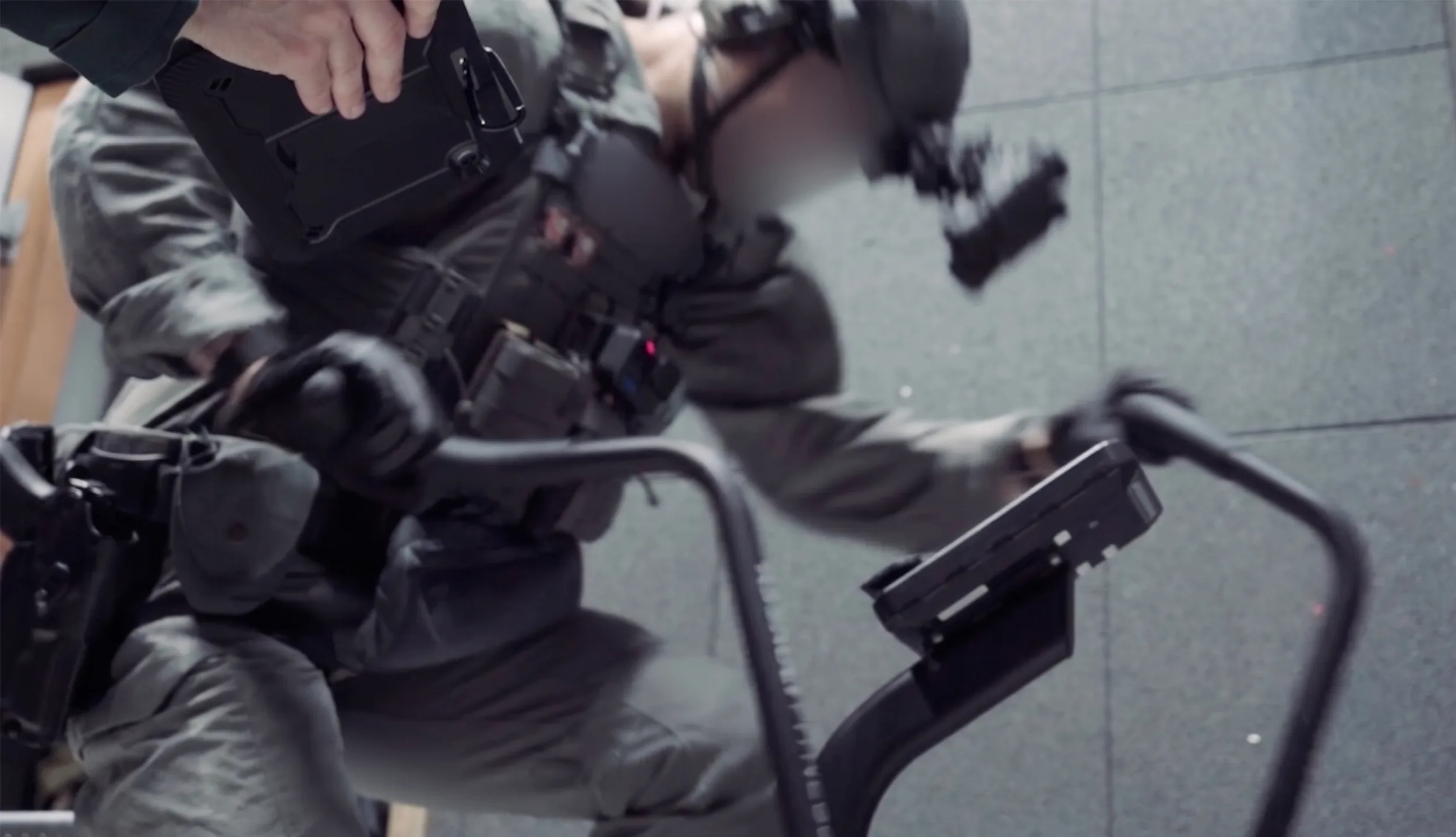
Fit for Tactical
Tactical work is aerobic work under load. Measure the capacity that governs it, at the unit, at cohort scale, without a lab.
Aerobic work, under load, for as long as the task takes
Tactical and military tasks are aerobic tasks performed under load: carrying weight over distance, working in protective equipment, sustaining output for hours rather than minutes. The physiological ceiling on all of it is aerobic capacity, and the intensity someone can actually hold is set by their ventilatory thresholds, not by their peak.
The same ceiling governs judgment. Accuracy and decision-making degrade under load before output does, which is why the sustainable work rate matters operationally in a way a peak number does not: it is the rate at which someone can still think.
Those are the numbers this platform measures directly, from gas exchange, rather than inferring them from heart rate and a population table. Two people with the same peak can be limited for entirely different reasons, and only the measurement tells you which.
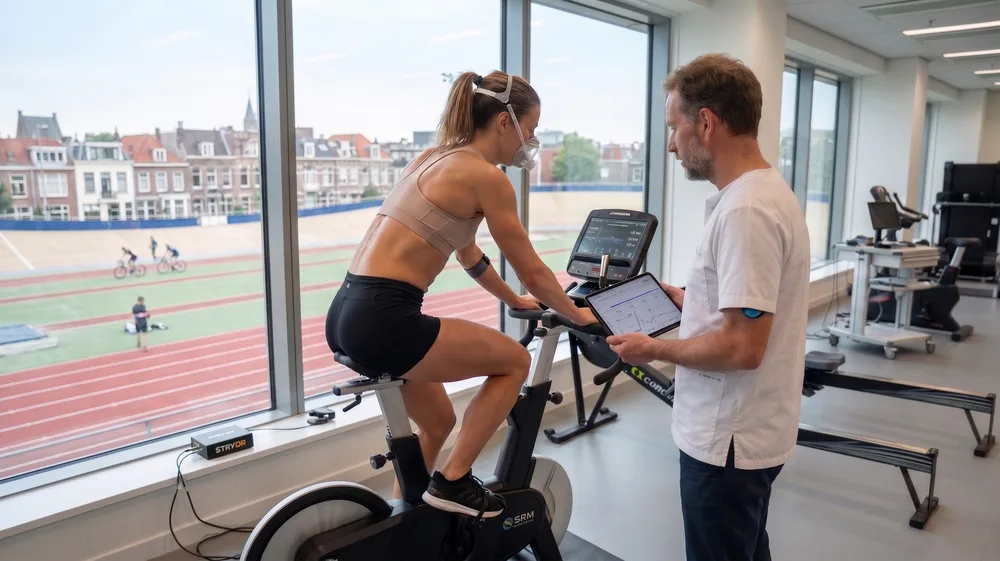
Measuring it no longer means booking a physiology lab. Portable sensors and an iPad put the assessment at the unit, on a whole intake cohort, as often as a training cycle needs it.
Where it fits
The same assessment set answers several questions a tactical organization already asks.
Selection and training pipelines
Assess an entire intake, then reassess through the pipeline. Fixed protocols mean week 12 is comparable to week 1 rather than a fresh baseline.
Conditioning program design
Zones anchored to each individual's measured thresholds, so a unit program can be prescribed to real physiology instead of a percentage of an estimated maximum heart rate.
Load carriage preparation
Sustained work under load is the task. Knowing the intensity someone can hold, and how their fuel use shifts as it rises, is directly applicable to preparing for it.
Reconditioning and return to training
Sub-maximal protocols let you track the recovery of aerobic capacity repeatedly, without asking for a maximal effort from someone rebuilding. Measurement to inform the staff making the decision, not the decision itself.
Nutrition and fueling
Measured resting metabolic rate and substrate use, what the body burns at rest and which fuel it burns under load, give a dietitian something specific to work from, which matters most for long duration and high output.
Longitudinal readiness tracking
Every assessment is stored per subject, so aerobic capacity becomes a trend across a career rather than a number from one test years ago.
What you can measure
One set of sensors, an assessment for each question. Only the VO2 max protocols ask for a maximal effort, which matters when the same people have to train the next day.
VO2 Max Ramp
The aerobic ceiling, measured from direct gas exchange and compared to the expected value for age, sex, height and weight, not estimated from a shuttle-run table. The same ramp gives the intensity a person can hold rather than the one they can touch, which for load carriage and sustained tasks is the more operationally useful of the two.
Tells you: VO2max, Breathing technique and efficiency, Ventilatory thresholds and zones.
VO2 1MAO
One minute of all-out effort on a bike, for a quick check when a full ramp does not fit the training day.
Tells you: VO2max.
Metabolic profile
Fuel use under load: where the fat-to-carbohydrate balance sits across the intensity range, from a sub-maximal ramp test.
Tells you: Substrate utilization, Ventilatory thresholds and zones.
Resting metabolism
Measured energy requirement from a short resting test. Ration and refueling planning built on this cohort's measured expenditure instead of a population average.
Tells you: Resting metabolic rate.
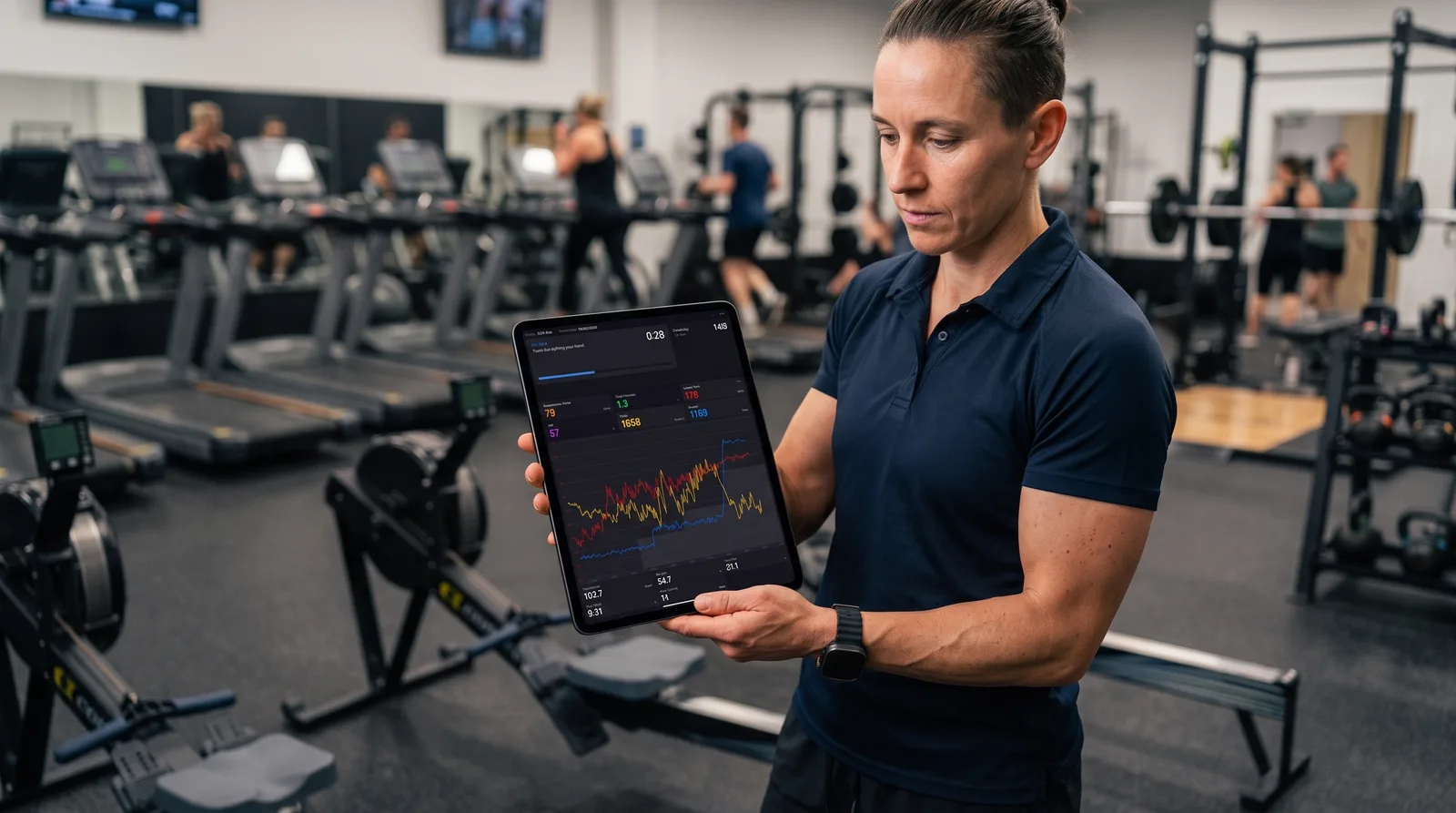
Why it works outside a lab
A unit is not a physiology laboratory, and an assessment that needs one does not get run.
Battery powered and wireless
Sensors are worn on the body and the app runs on an iPad. Nothing is bolted down and nothing needs mains power during a test.
Run by non-specialists
Guided setup per sensor, from power on and connect through configure, calibrate and place, so one professional can run the assessment and it does not wait for a visiting physiologist.
Cohort throughput
Assessments run back to back with nothing to reset between subjects beyond a fresh filter and a mask check.
Predictable to budget
A fraction of the capital cost up front, then a flat fee per assessment. The sensors and machines are procured outright, from us or from anyone else, so there is no lease to renew.
Dedicated environments
A dedicated environment can be set up for additional personalization and added security, with SSO against your own identity provider.
Assess a unit or an intake cohort
Tell us the cohort size and the cycle you work to, and we will show you what a testing block looks like.
SplendoHealth
Guided from setup to report
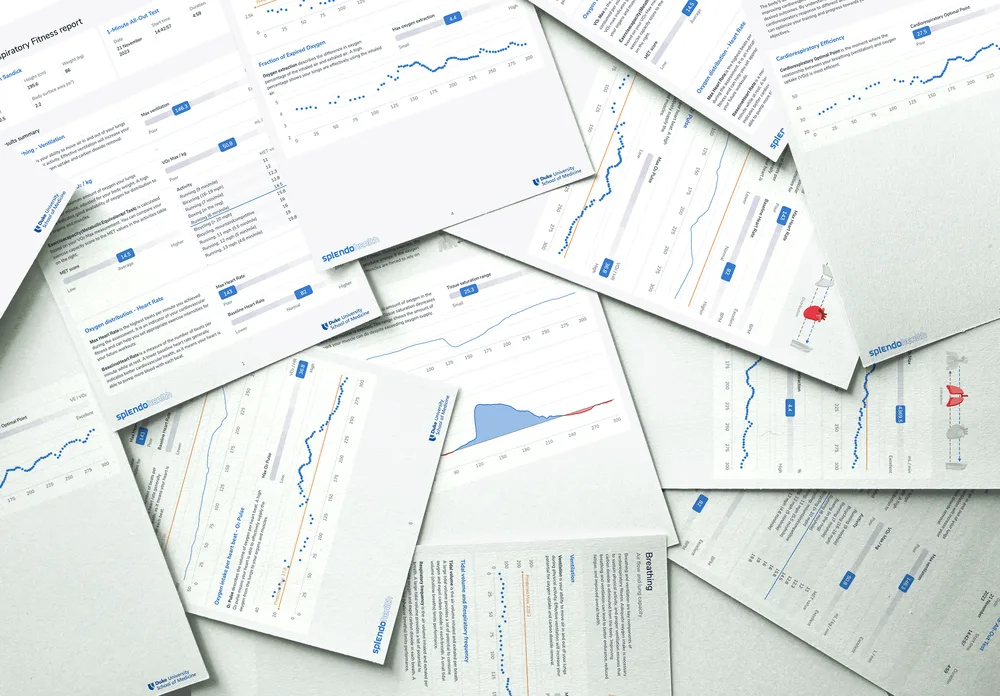
SplendoMonitor connects over Bluetooth to metabolic analyzers, heart rate and tissue saturation sensors, and ergometers from different manufacturers, then stitches their signals into a single assessment with one timeline and one report.