Fit for Service
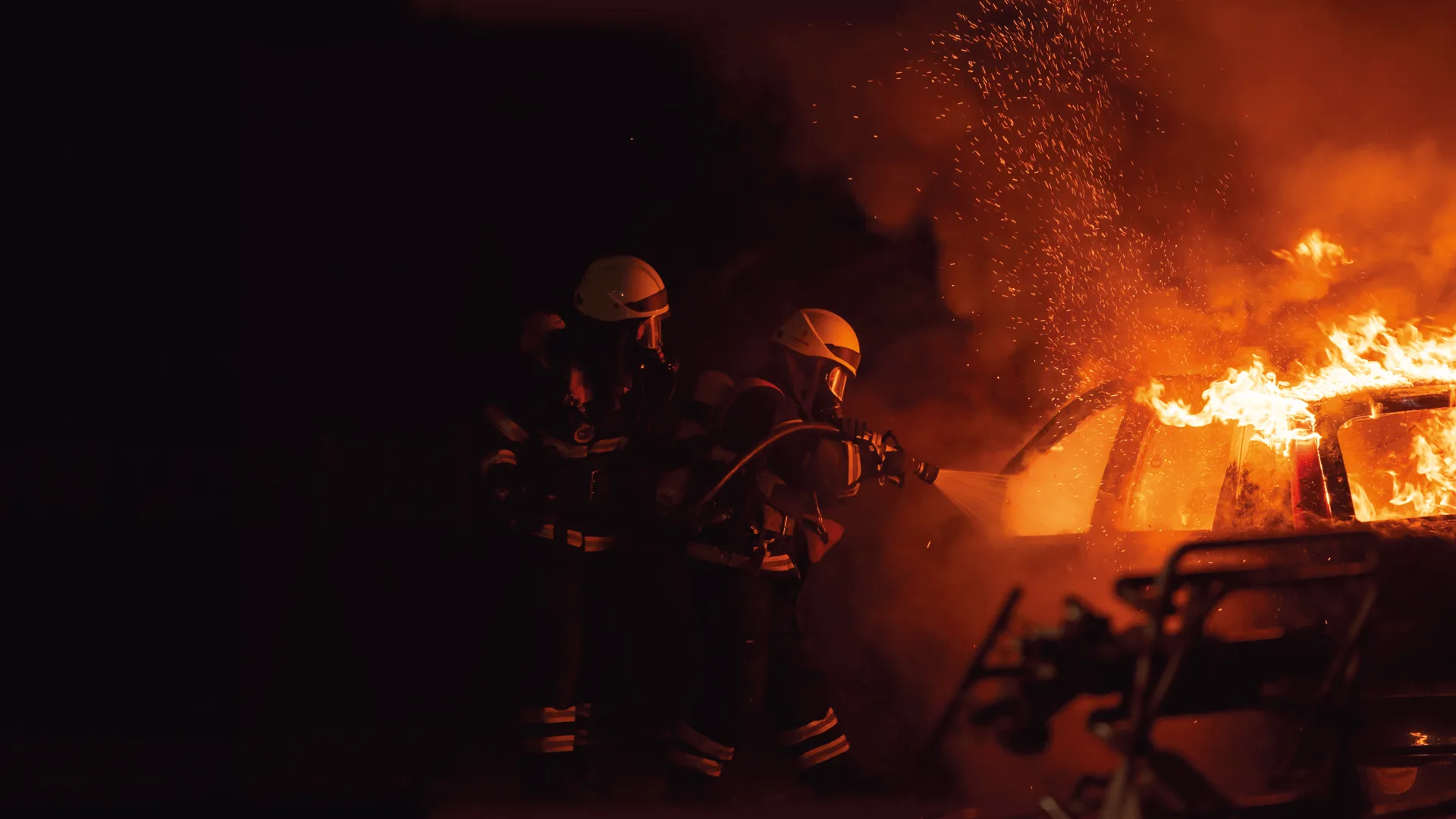
Fire, EMS and law enforcement. Aerobic work under load, and the judgment that has to hold up inside it, measured on site, between shifts, for a whole watch.
The job sets the standard
Across the first-responder services the physical demand is the same shape: aerobic work, under load, sustained for as long as the task takes. Carrying weight over distance, working in protective equipment, holding an output for hours. That demand has a floor, and the floor does not move because a shift is short-staffed.
It is not only a question of capacity. Accuracy and decision-making degrade under load before output does, and they degrade first in the people working closest to their ceiling. Knowing the work rate someone can actually hold is knowing where their judgment starts to cost them.
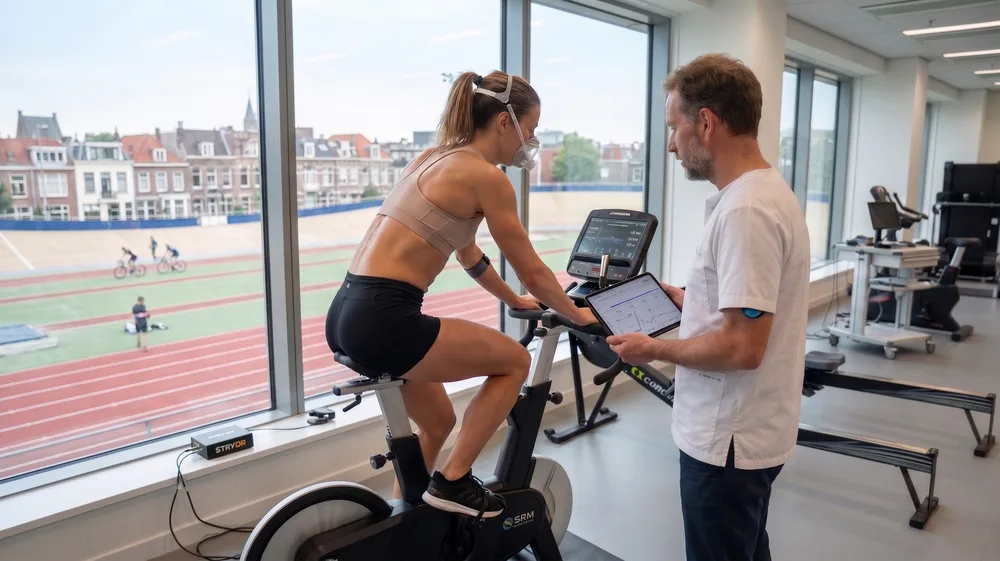
The obstacle has never been whether the measurement is useful. It is logistics. Sending people to a physiology lab means travel, overtime and a booking, so testing gets deferred until it is an annual event and the data is stale. One professional, portable sensors and an iPad move the assessment to the station, the hall, or the field.
One thing this is not: a medical screen. We measure aerobic capacity and metabolism. Fitness-for-duty and occupational health decisions belong to the medical and command authorities who own them, using the instruments approved for that purpose.
Who this is for
Three populations, one assessment set. The physical demand differs in context rather than in kind.
Fire and rescue
Working in protective equipment on air is among the most aerobically demanding jobs there is. Thresholds describe the work rate a firefighter can actually hold in it.
EMS
Lifting, carrying and stair work at unpredictable intervals across a long shift, where recovery between calls matters as much as peak capacity.
Law enforcement
Wider than a municipal department: sheriff's offices, state and federal agencies, corrections, border and customs. The shift is long periods of low output punctuated by short maximal efforts, often in body armor, so the ceiling and the sustainable rate are both worth knowing.
Military and tactical
Selection pipelines, load carriage and conditioning at unit scale have their own page, because the cohort sizes and the reporting lines are different.
What you can measure
Direct measurement of aerobic capacity and the thresholds that describe sustainable work rates.
VO2 Max Ramp
Breath-by-breath oxygen uptake, compared to the expected value for age, sex, height and weight. Measured, not estimated from a step-test table. The ramp also fixes the intensity boundaries that separate a work rate someone can hold from one they cannot, which is where judgment and accuracy start to go as well.
Tells you: VO2max, Breathing technique and efficiency, Ventilatory thresholds and zones.
VO2 1MAO
A one-minute all-out effort, for a crew check that has to fit between calls.
Tells you: VO2max.
Metabolic profile
Where the fat-to-carbohydrate balance sits as intensity rises, from a sub-maximal ramp test that does not require an all-out effort.
Tells you: Substrate utilization, Ventilatory thresholds and zones.
Resting metabolism
Energy expenditure at rest, measured rather than assumed, the baseline for any nutrition guidance across a long shift pattern.
Tells you: Resting metabolic rate.
Progress over time
Fixed protocols mean a retest after a conditioning program is a comparison rather than a fresh baseline.
Whole-crew throughput
Assessments run back to back with nothing to reset between subjects, so a watch or a shift can be worked through in one session.
Why it works on site
A station is not a laboratory, and testing that requires one does not happen.
One professional
Guided setup per sensor, from power on and connect through configure, calibrate and place, means the assessment does not wait for a visiting physiologist.
No equipment required
If exercise equipment is not available, the six-minute incremental step test is a high-knee march at the pace of a metronome. It needs floor space and nothing else.
Wireless and battery powered
Sensors are worn on the body and the app runs on an iPad. No cart, no fixed room, no power outlet.
Priced per assessment
A fraction of the capital cost up front, then a flat fee per assessment, so a quiet quarter costs nothing and a heavy one is predictable.
Assess a crew on site
Tell us how many people and how often, and we will show you what it would take.
SplendoHealth
Guided from setup to report
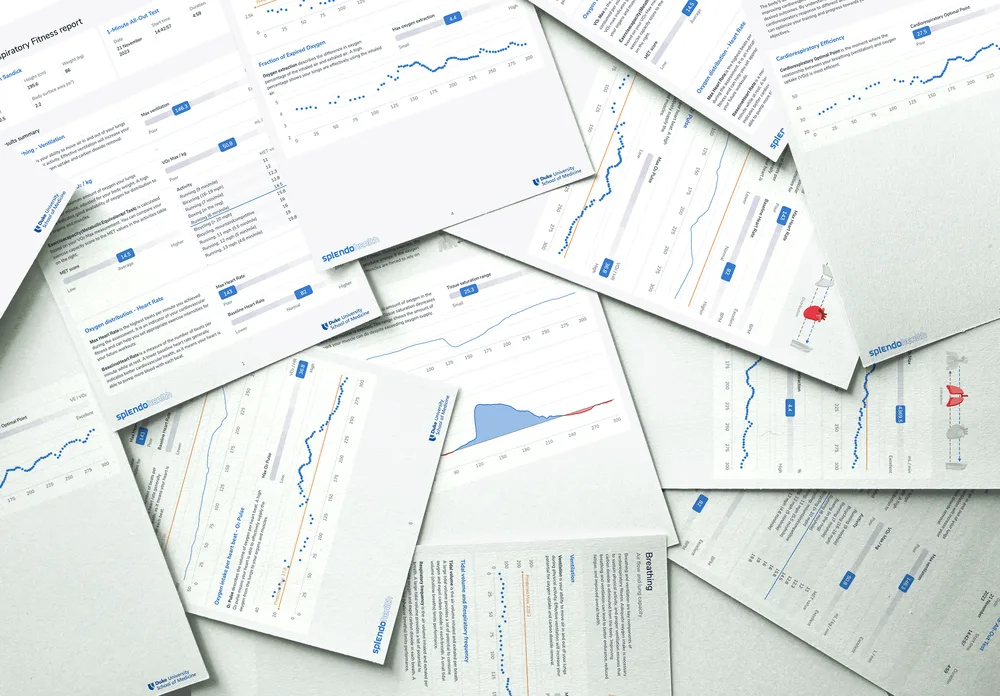
SplendoMonitor connects over Bluetooth to metabolic analyzers, heart rate and tissue saturation sensors, and ergometers from different manufacturers, then stitches their signals into a single assessment with one timeline and one report.
SplendoMonitor is a Cardiorespiratory & Metabolic fitness assessment tool. It is not a certified medical device and is not intended for diagnosing, treating, or monitoring medical conditions. These assessments measure fitness. They are not an occupational health examination and do not determine fitness for duty.