
Fit for surgery
Fitness before surgery is one of the best-evidenced applications of exercise testing. This page is about that evidence, not a product pitch.
Perioperative research
The perioperative literature is clear about the relationship between cardiorespiratory fitness and surgical outcomes. Despirte this, fitness assessment is rarely used to decide whether a patient is fit for surgery, or stratifying their surgical risk.
We are working with academic and hospital research groups to change that, and we are happy to talk to any group that wants to run a prehabilitation study.
Research collaborations
We work with academic and hospital research groups on prehabilitation and perioperative physiology. Our contribution is measurement infrastructure: a portable way to run the same assessment repeatedly, at the bedside or in a gym, without booking a lab.
Duke Heart
Collaboration on cardiopulmonary physiology and prehabilitation research. Members of our medical advisory board hold appointments at Duke.
Radboud UMC
Collaboration on prehabilitation research in the Netherlands.
What we bring
Repeatable protocols on portable sensors, run identically by a research assistant every time, so a study can measure the same participant many times over a course of treatment instead of once in a lab.
What we do not do
We do not interpret results, assign risk, or make recommendations about a patient's care. The data belongs to the researchers and the clinicians.
The published evidence
These are third-party, peer-reviewed studies. They are not our results, and none of them evaluates our product. They are the reason the measurement matters.
Subjective assessment underestimates surgical risk: On the potential benefits of cardiopulmonary exercise testing for open thoracoabdominal repair
D.M. Bailey et al. (2022)
'Fit for surgery': the relationship between cardiorespiratory fitness and postoperative outcomes
George A. Rose et al. (2022)
Association of Preoperative High-Intensity Interval Training With Cardiorespiratory Fitness and Postoperative Outcomes Among Adults Undergoing Major Surgery
K. Clifford et al. (2023)
Effects of Exercise Mode on Improving Cardiovascular Function and Cardiorespiratory Fitness After Bariatric Surgery: A Narrative Review
A.M. Mahmoud et al. (2018)
Short-Term Effect of Bariatric Surgery on Cardiorespiratory Response at Submaximal, Ventilatory Threshold, and Maximal Exercise in Women with Severe Obesity
N. Vibarel-Rebot et al. (2023)
Running a prehabilitation study?
Tell us what you need to measure and how often, and we will tell you whether this fits.
SplendoHealth
Guided from setup to report
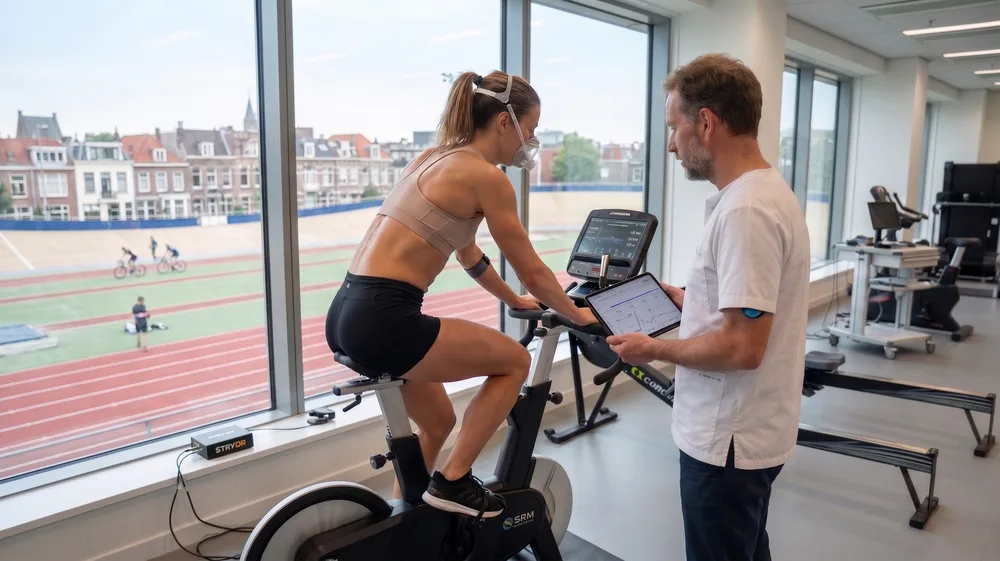
SplendoMonitor connects over Bluetooth to metabolic analyzers, heart rate and tissue saturation sensors, and ergometers from different manufacturers, then stitches their signals into a single assessment with one timeline and one report.


SplendoMonitor is a Cardiorespiratory & Metabolic fitness assessment tool. It is not a certified medical device and is not intended for diagnosing, treating, or monitoring medical conditions. Nothing on this page should be read as guidance for an individual patient's care, or as a claim that SplendoMonitor can assess surgical risk.